

Outer / Health technology
How can Wearable technology and AI enable more personalized, proactive health?
Developed alongside a wearable project with URI’s Soft Matters Lab, Outer is a companion-app concept that connects compression control, everyday health feedback, movement, and AI-assisted conversation.
The context
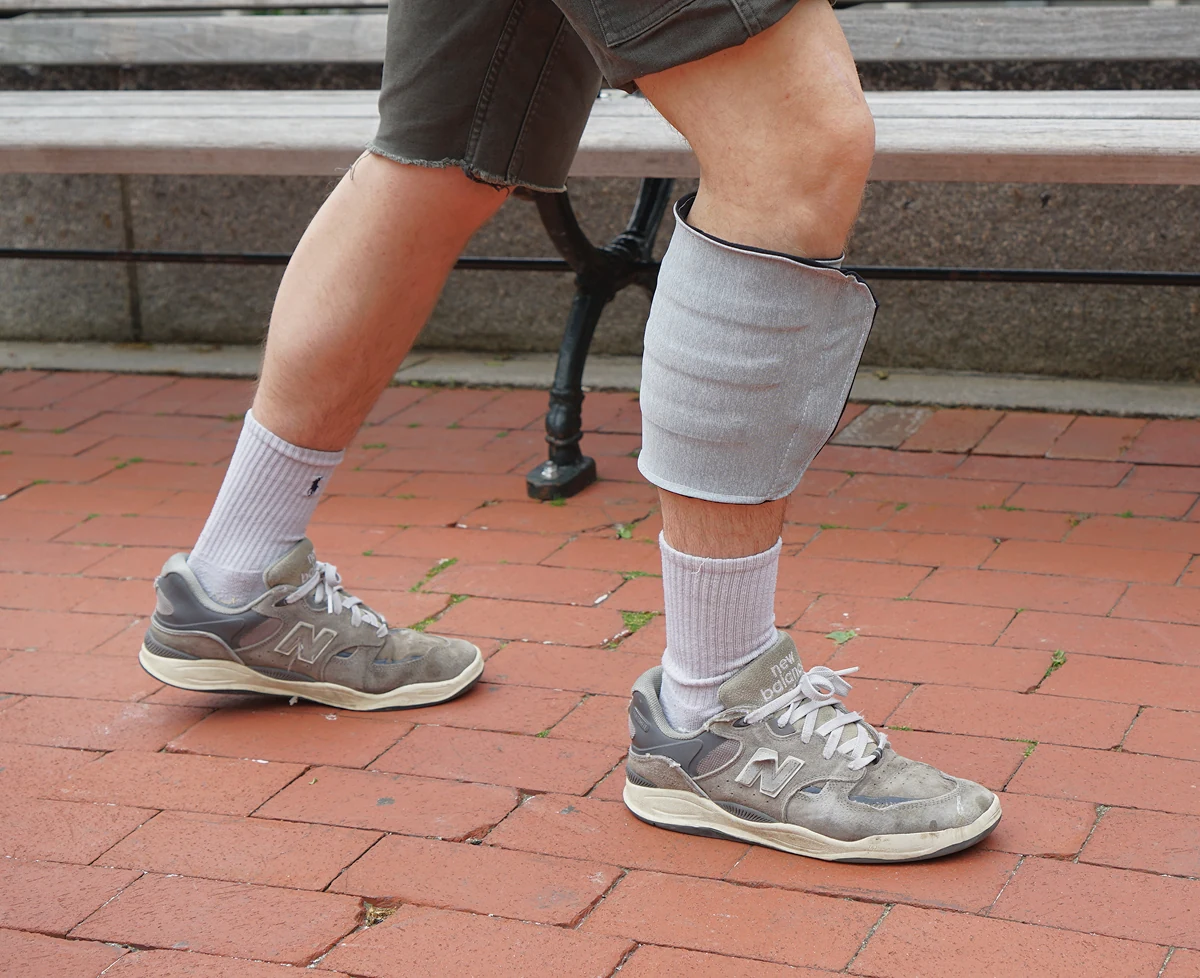
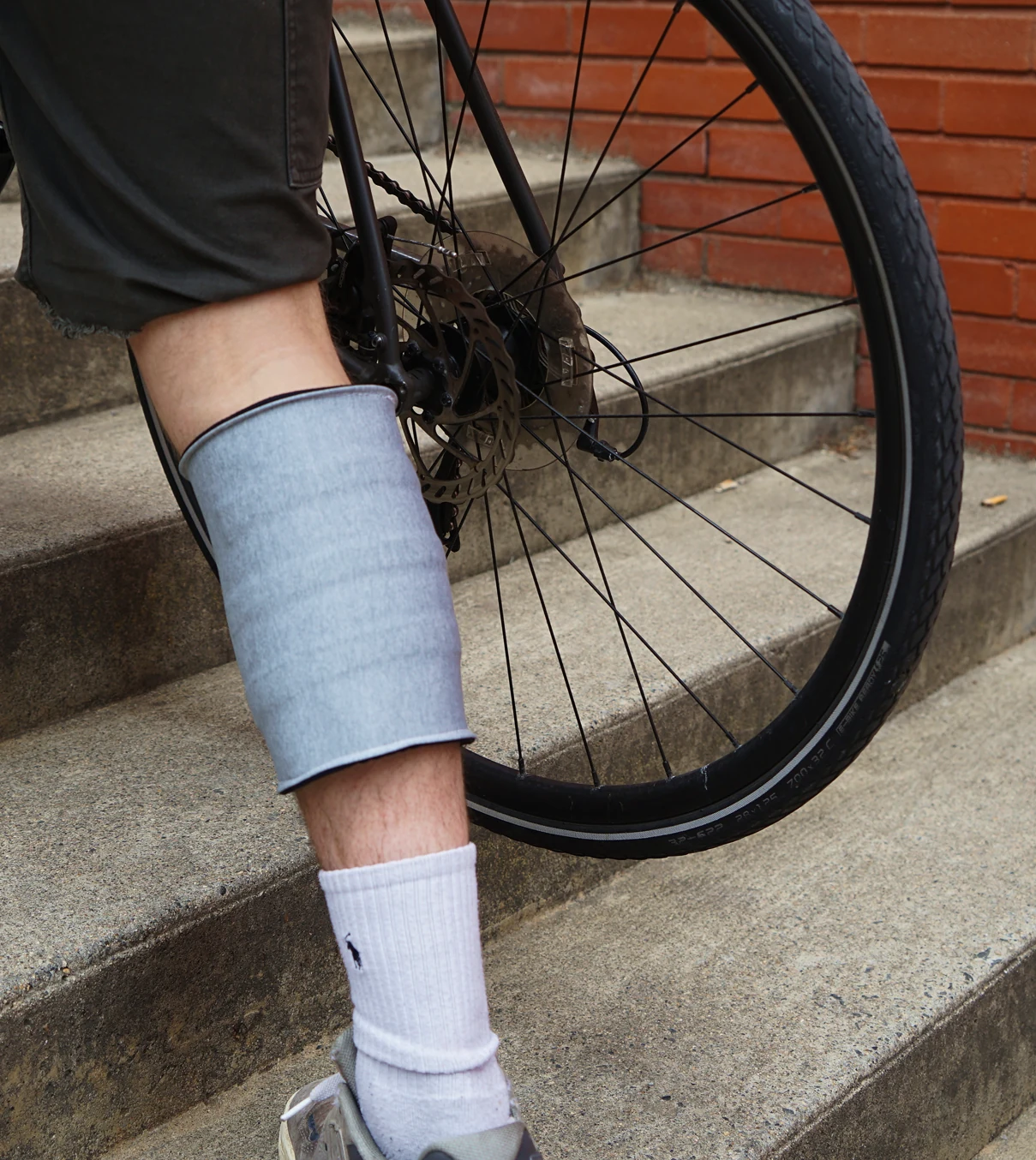
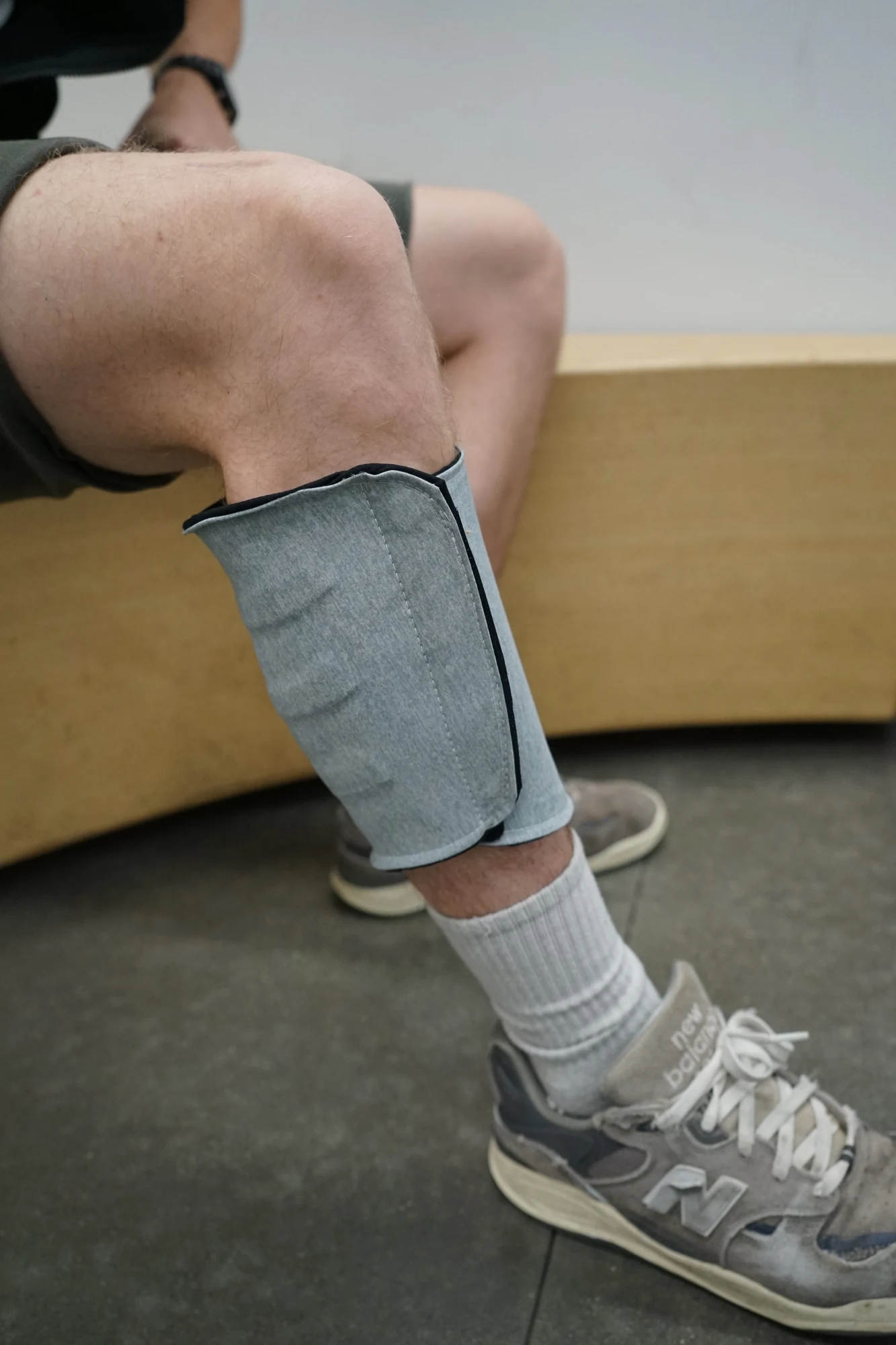
A working sleeve prototype.
Flex Sleeve is a soft, wraparound calf wearable designed to support circulation through adjustable compression. Heat-responsive actuators tighten and relax, with programmable timing and intensity for activity or rest.
The problem
Three barriers to consistent care.

Visibility
Users often feel ‘feedback voids’ in their progress. Without a clear connection between a compression session and their progress, motivation wanes.
Fear of Movement
Patients with venous malformations often avoid exercise for fear of triggering pain.

Information Overload
Patients are often given generic recovery tips that don’t apply to their specific flare-ups. They need guidance that fits their own recovery.
The solution
Help people see the value in every wear.
Outer brings sleeve control, health feedback, exercise, and conversation into one companion. Each part supports a daily routine, while device activity and personal context carry through the experience.
The question behind every screen was simple: does it help someone understand their sleeve, recognize their effort, or feel more confident about what comes next?
01 / Device control
A familiar way to manage a new device.
I borrowed the familiarity of Spotify’s persistent bottom player. A compact device panel follows the user through the app, keeping activity visible while they explore their health, start a workout, or talk to Otto.
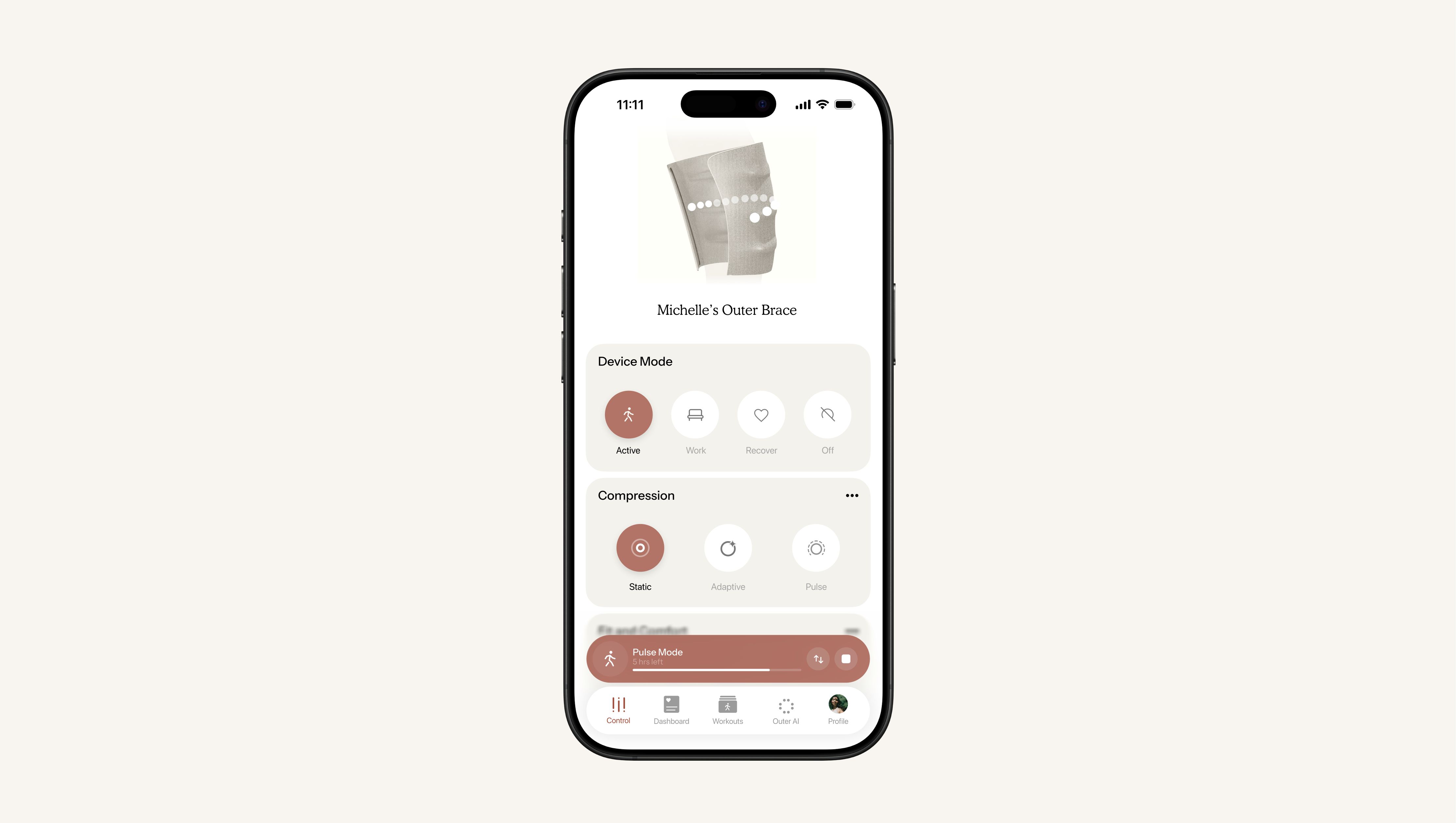
Your sleeve stays in view, wherever you go.
Connection, modes, and controls share one dedicated space. A persistent activity panel keeps the current session visible while someone moves between health information, workouts, and Otto.
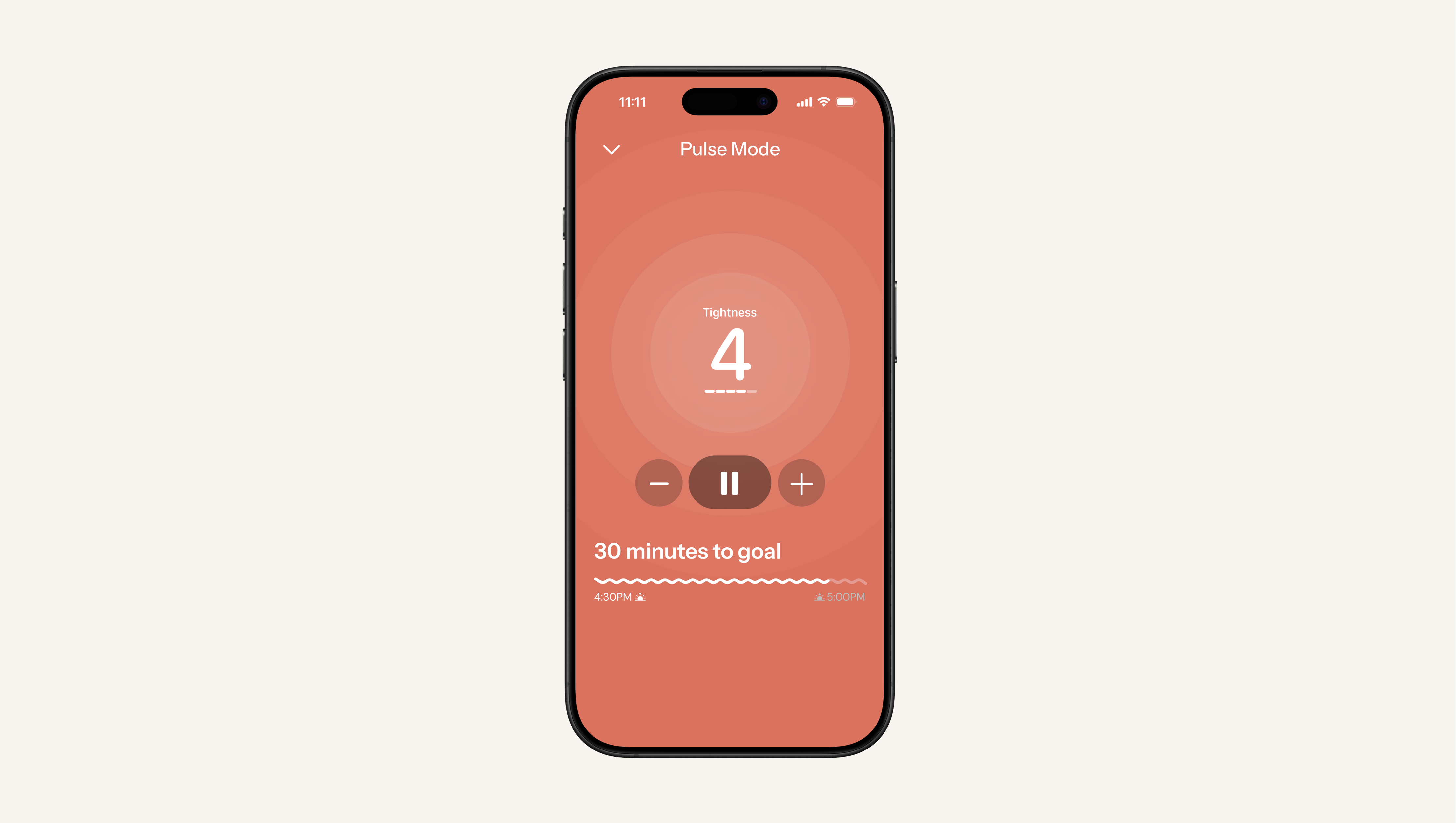
A clear route back to the controls.
The compact activity panel opens into the current session. Keeping status and adjustments together helps someone understand what the sleeve is doing and return to its controls.
02 / Health & milestones
Make progress easier to see.
The health dashboard brings together the day’s health picture, wearing time, and progress toward goals. Statistics sit alongside wearing plans and lessons, helping someone review their routine and decide what to do next.
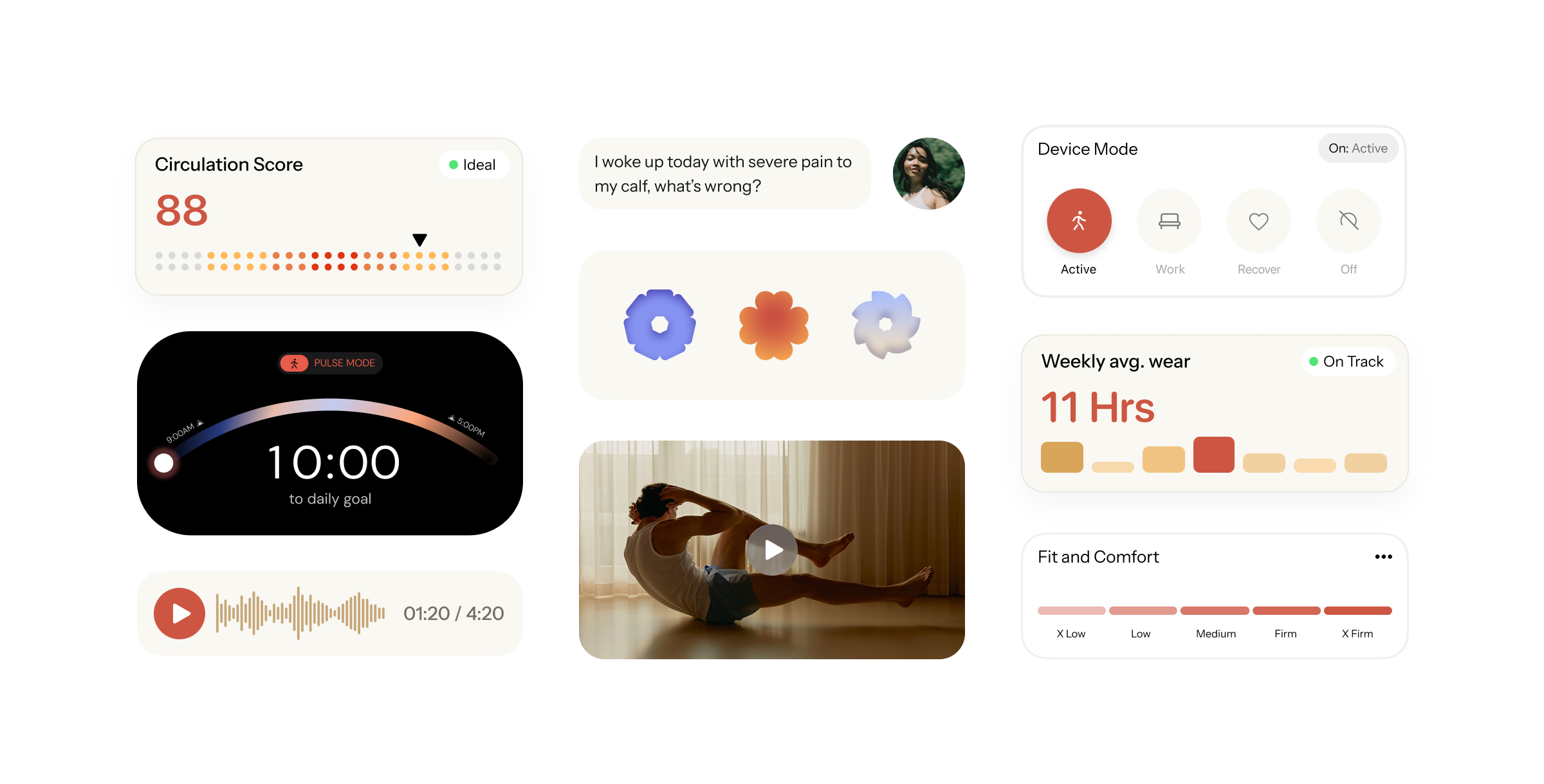
See what your everyday effort adds up to.
Circulation, weekly wear, and device status share a consistent visual language. Goals and wearing plans sit alongside the information, giving someone a place to review their routine and choose a next step.




03 / Exercise
Support a routine that feels like your own.
A useful training plan needs to account for more than a goal. Outer’s exercise concept considers routines, capabilities, and strain, with a plan designed to adapt as those needs change. Guided videos explain each session; body-mapping feedback is envisioned to help people understand their form as they move.
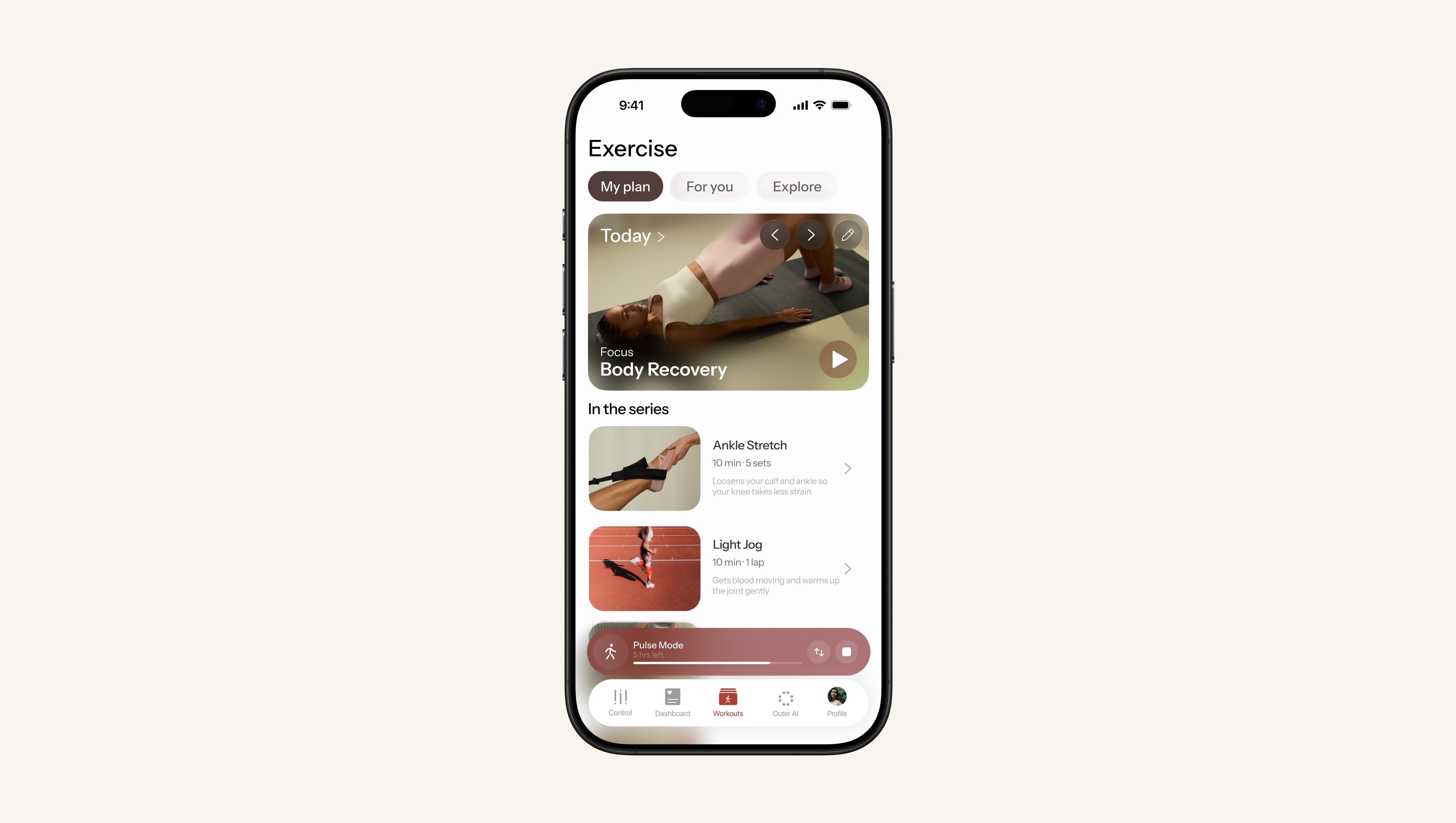
A plan that moves with you.
My Plan holds chosen sessions, For You offers a direction for recommendations, and Explore introduces other guided workouts. The concept considers routines, capabilities, and reported strain when shaping a plan.
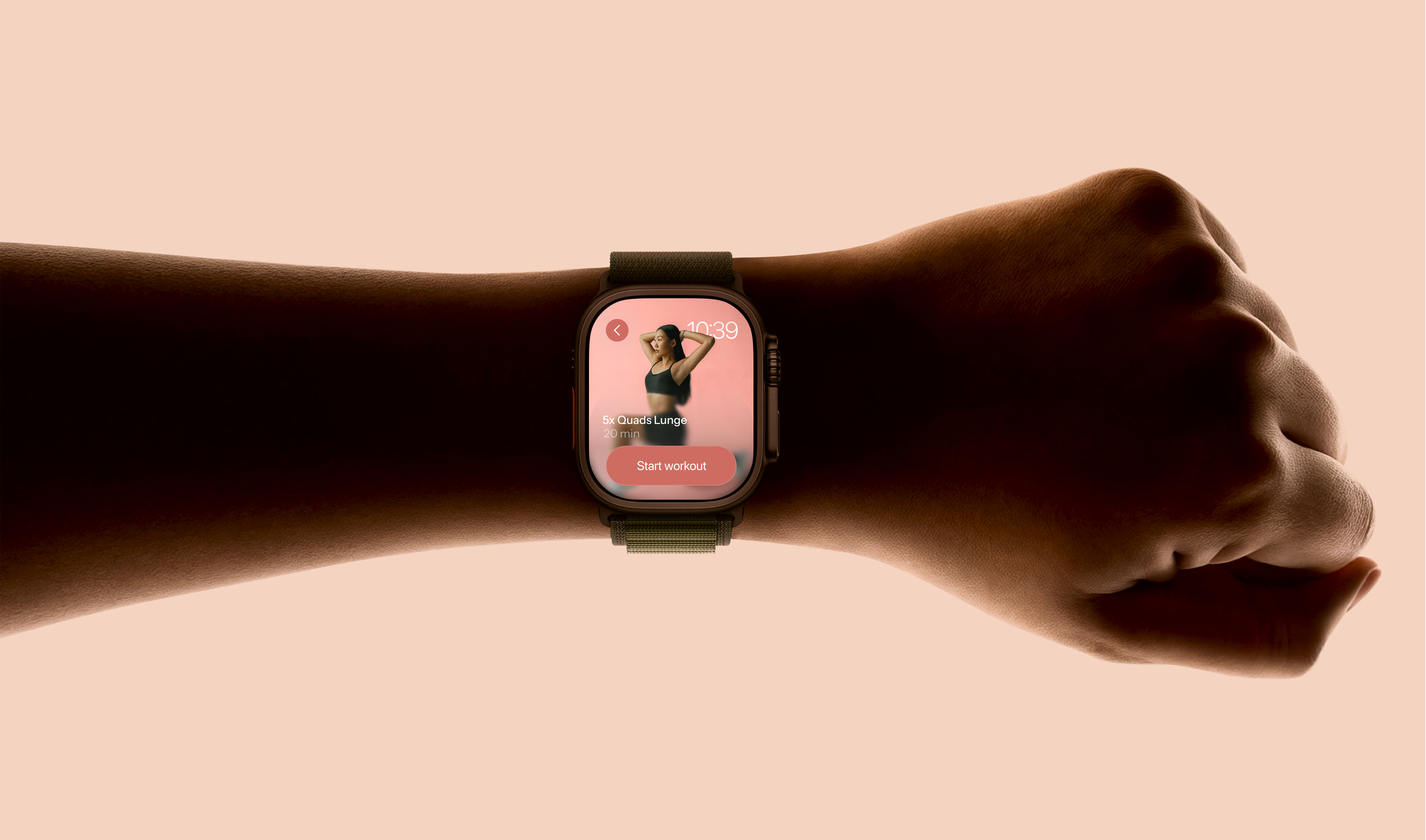
Guidance through each session.
Guided sessions help explain each movement. The exercise concept keeps the chosen routine close at hand, with room to adapt as someone’s needs change.
04 / Otto
Keep care and context in the same conversation.
Otto brings assistance and communication with a healthcare provider into one conversational space. The concept lets users log how they feel, review progress, adjust sleeve controls, and see visual cards without moving between separate tools.
Personal details, connected services, and preferences remain in Profile, giving users a place to review the context behind their experience without crowding the daily flow.
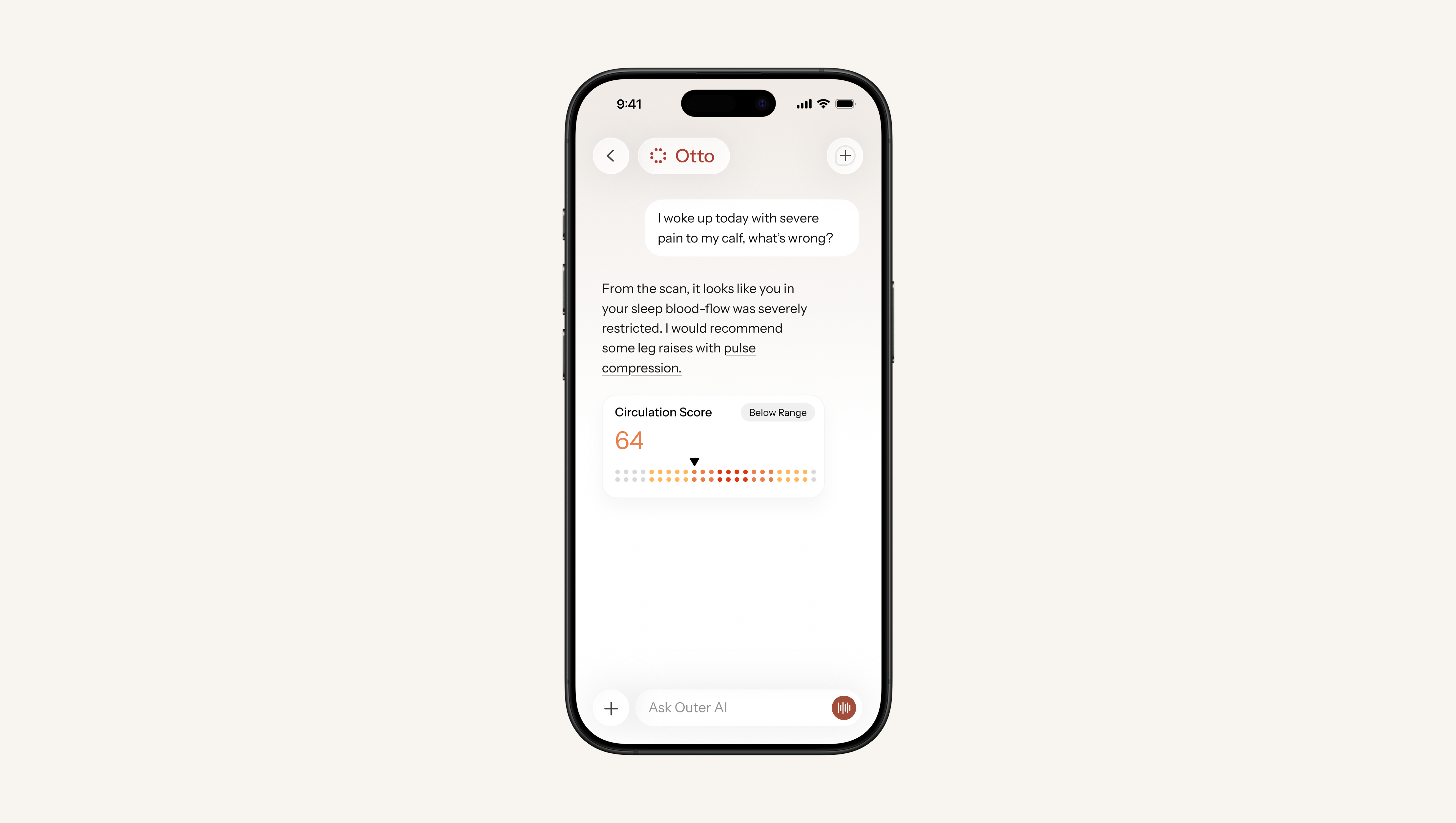
A conversation that connects the pieces.
Otto brings check-ins, progress, and sleeve controls into one conversational concept. Visual cards sit beside the conversation so someone can review information without moving to another part of the app.


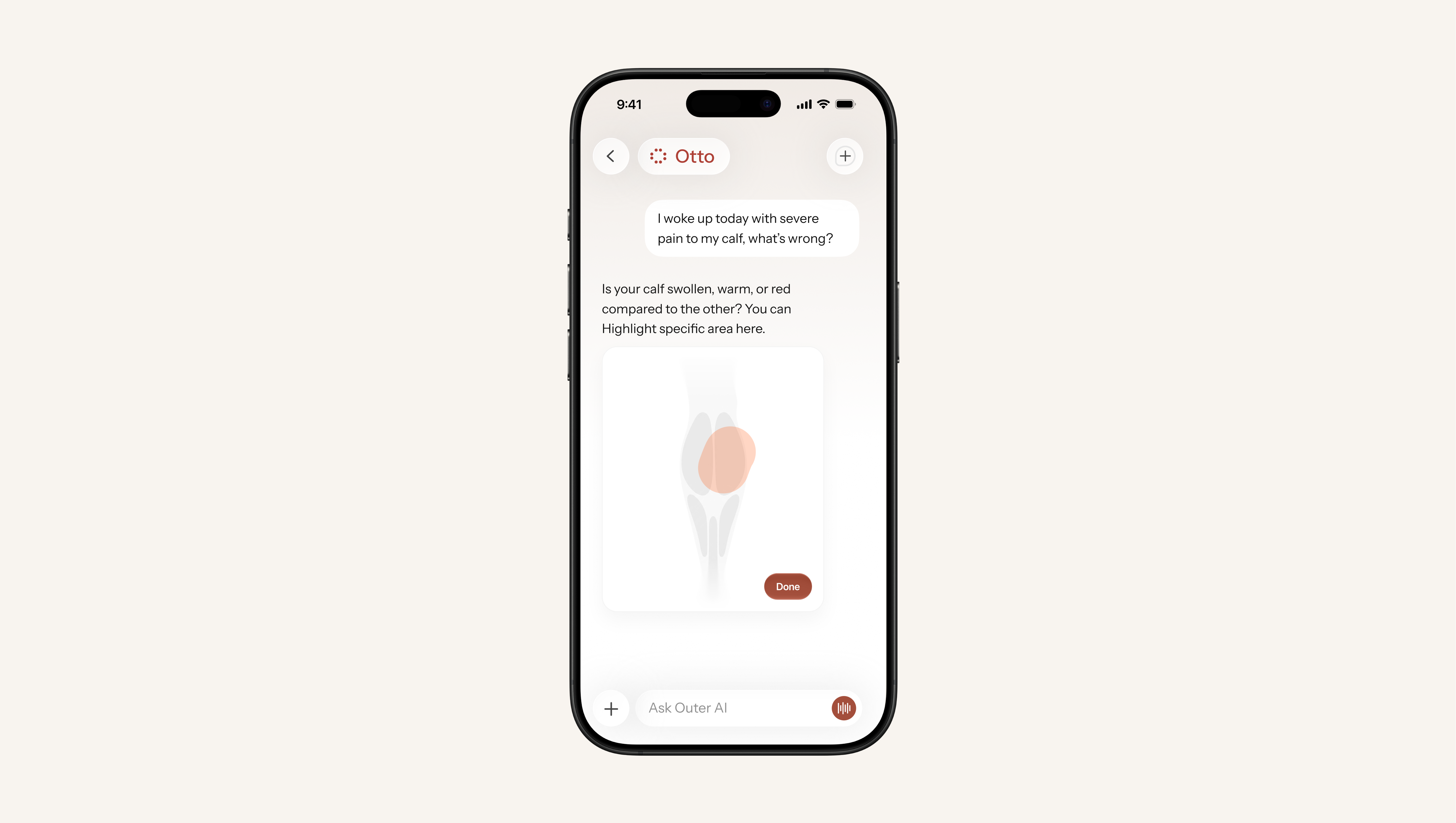
Show where it hurts.
Someone can mark an area of the body to explain a feeling more clearly. The proposed flow connects that input with adjustments to review, a journal entry, or information to share with a provider.
What I learned
The app became more than a way to control a device.
What began as an interface for a wearable became an exploration of how to make a daily care routine feel more understandable and personal. The outcome is a companion-app design that connects sleeve control, health feedback, exercise, and conversation.
The biggest lesson was the importance of the feedback loop. Control helps someone use the sleeve; visible progress gives them a reason to return. Every part of the experience needed to reinforce that relationship.
The next step is to test whether people understand the feedback and whether it supports continued wear. Adaptive exercise, body mapping, and AI-assisted adjustments also need validation with users and clinical collaborators. These remain design directions, rather than measured health outcomes.